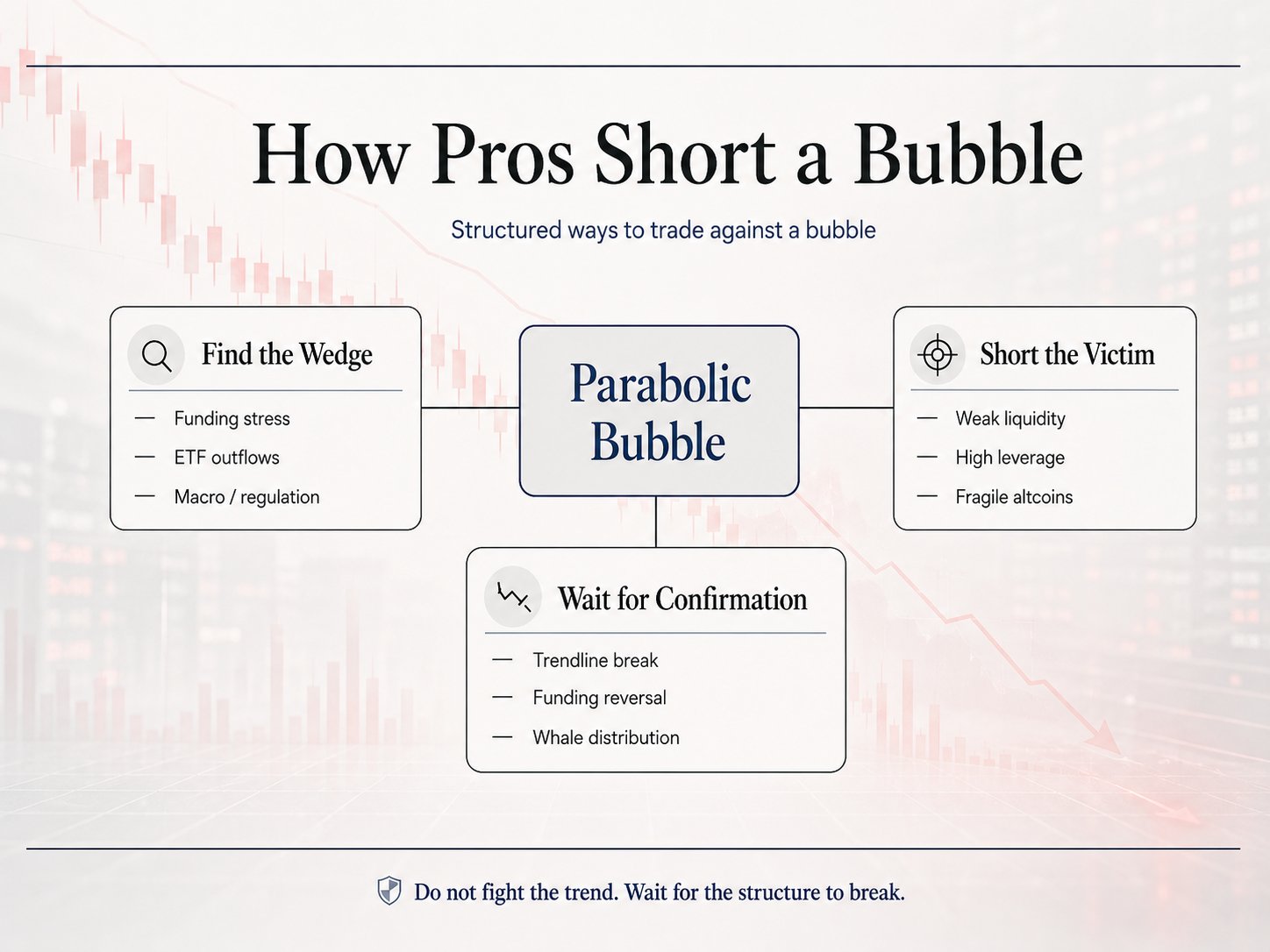
How to short intelligently when bubbles appear in crypto❓
From what I have observed in previous cycles, most traders lose money when trying to short a bubble that is still going parabolic.
Not because their thesis is always wrong.
But because their timing, structure, and risk management are.
So why is directly shorting a hot bubble extremely risky?
– Squeeze risk increases fast: When price keeps pushing higher, your short position takes more pain the longer you hold.
– Shorting cost can become expensive: When an asset moves 10–20% per day, volatility, funding, and borrow costs can become brutal.
– Narrative can last longer than your margin: In crypto, attention itself can become liquidity.
We saw this across multiple crypto bubbles:
Memes: $DOGE, $SHIB, $PEPE, $WIF
AI / AI memes: $TAO, $FET, $VIRTUAL, $AI16Z, $GOAT
L2 / infra beta: $ARB, $OP, $STRK, $TIA
The lesson is simple:
Being “right” about a bubble does not matter if you short it too early.
So instead of blindly shorting the strongest token, professional traders usually think in 3 ways:
1. Find the “wedge”
A wedge is the pressure point that can break the narrative.
In crypto, this can be:
– Funding staying extremely high for too long
– Spot demand slowing down while leverage keeps rising
– ETF flows turning negative
– Macro pressure from rates, liquidity, or regulatory headlines
– On-chain data showing whales distributing into retail demand
The idea is not to short only because “price is too high.”
It's to find what can actually reverse the flow.
2. Short the “victim”
You do not always need to short the strongest bubble asset.
Sometimes the better setup is to short the weaker asset that gets dragged down when the bubble cools.
In traditional markets:
– 2008: some traders did not short houses directly, they shorted banks and credit-linked vehicles
– China: some did not short banks, they shorted highly leveraged companies
In crypto, this means watching the weaker beta inside the same narrative:
– AI names with no real usage while stronger AI tokens lead the move
– Meme beta with thin liquidity and heavy insider distribution
– Infra/L2 tokens with inflated FDV, weak fees, and declining activity
– DeFi tokens with TVL growth but weak organic revenue and poor token value capture
Not saying these are shorts.
They are simply examples of where traders should watch relative strength, liquidity, unlocks, FDV, revenue, and holder distribution.
3. Wait for confirmation
This is probably the most important part.
Do not short only because something “looks too hot.”
Wait until the market confirms weakness.
Common confirmation signals:
– Price breaks an important trendline
– Funding flips or cools down sharply
– Open interest drops while price fails to reclaim highs
– Volume fades on each bounce
– On-chain flows show large holders distributing
– Narrative attention remains high but price no longer responds
That is usually when the risk/reward becomes cleaner.
My personal view:
In the current crypto market, blindly shorting bubbles is still one of the fastest ways to get liquidated.
The smarter play is patience.
Find the pressure point.
Identify the weaker victim.
Wait for confirmation.
And never forget:
A bubble can stay irrational longer than your margin can survive. NFA.
 Dogecoin (DOGE)
 Coinfessions Media Influencer B222.00K @coinfessions
 Crypto Lama TA_Analyst Trader A4.29K @RivettaGiorgio
 CoinDesk Media Researcher D3.63M @CoinDesk
 13 0 304 オリジナル >リリース後のDOGEのトレンド強気
 Trader Tardigrade 🧬 TA_Analyst Trader C77.80K @TATrader_Alan
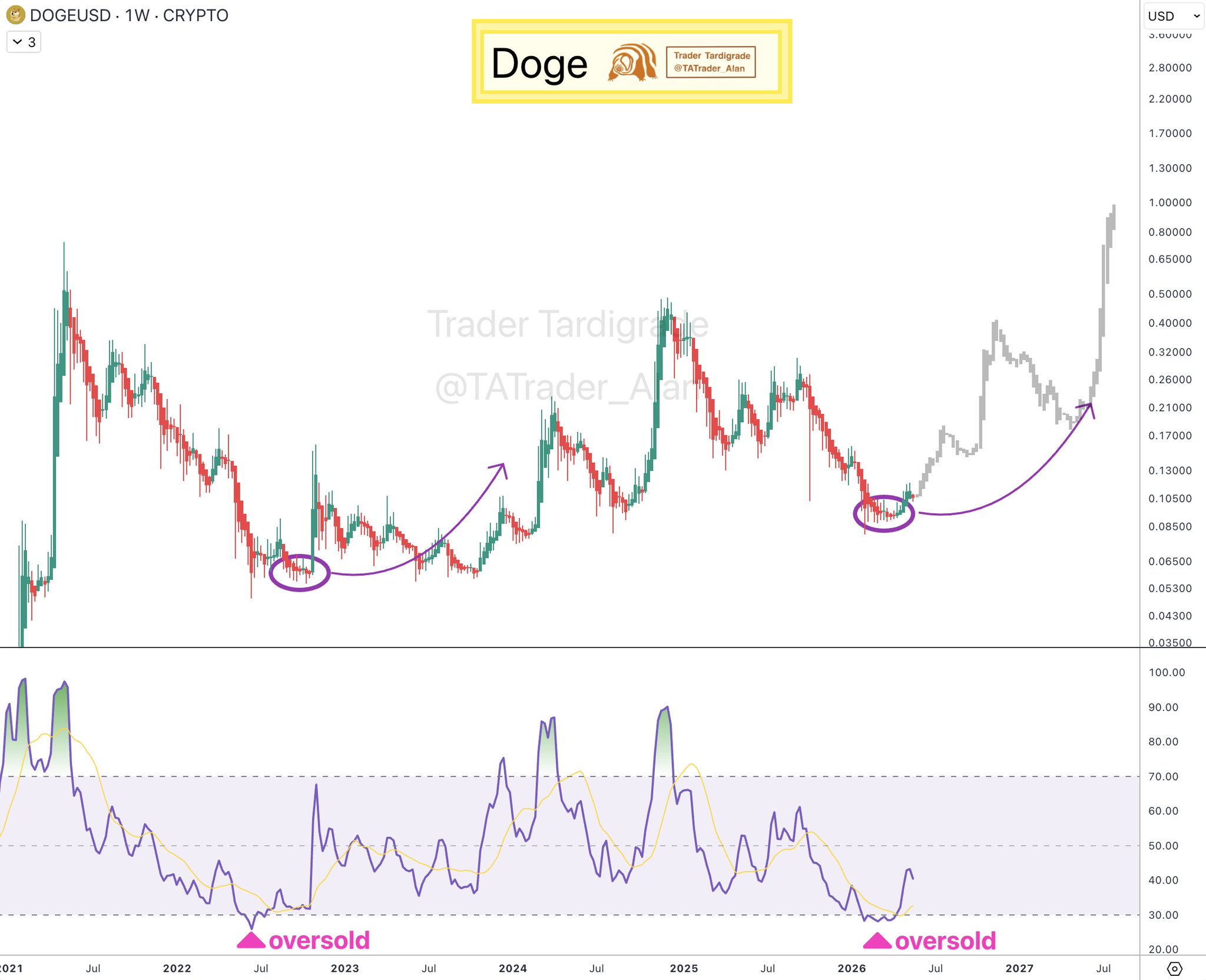 150 9 6.88K オリジナル >リリース後のDOGEのトレンド非常に強気