
I love robinhood
Rewards
Futures Daily Draw
100% Chance To Win With Daily Trades
Spot Daily Draw
Win 8,888 USDT In Grand Prizes
Mobile Top-Up
Top up mobiles easily, online, secure
Send
Send money globally, fast and secure
BitMart Mall
Live on crypto

CRYPTO (CRYPTO)
--
0%
24H
CRYPTO CRYPTO Price History USD
Track the price of CRYPTO for today, 7 days, 30 days and 90 days
Period
Change
Change (%)
Today
--
--
7days
--
--
30days
--
--
90days
$ 0.00085
-23.24%
Own CRYPTO Now
Buy and sell CRYPTO easily and securely on BitMart.
CRYPTO Market Information
$ 0.0028 24h Range $ 0.0038
All time high
$ 0.0038
All time low
$ 0.0028
24h Change
24h Vol
0
Circulating supply
0.00
CRYPTO
Market cap
0
Max supply
10.00M
CRYPTO
Fully diluted market cap
0
Trade CRYPTO
CRYPTO X Insight

le.hl
Influencer
Media
S
 20.7K @0xleegenz
 Bullish
Ready to deploy CRYPTO on the Robinhood chain, holders are bullish
le.hl
Influencer
Media
S
20.7K @0xleegenz @bankrbot Hey @bankrbot
Deploy $CRYPTO on robinhood chain
Owning this as my creator token
 1
1
 3
3
 337
337
2026-07-12 05:33
Trend of CRYPTO after release
Bullish
Ready to deploy CRYPTO on the Robinhood chain, holders are bullish

Smart Money Crypto
OnChain_Analyst
Trader
A
47.1K @Smart_Money Bearish
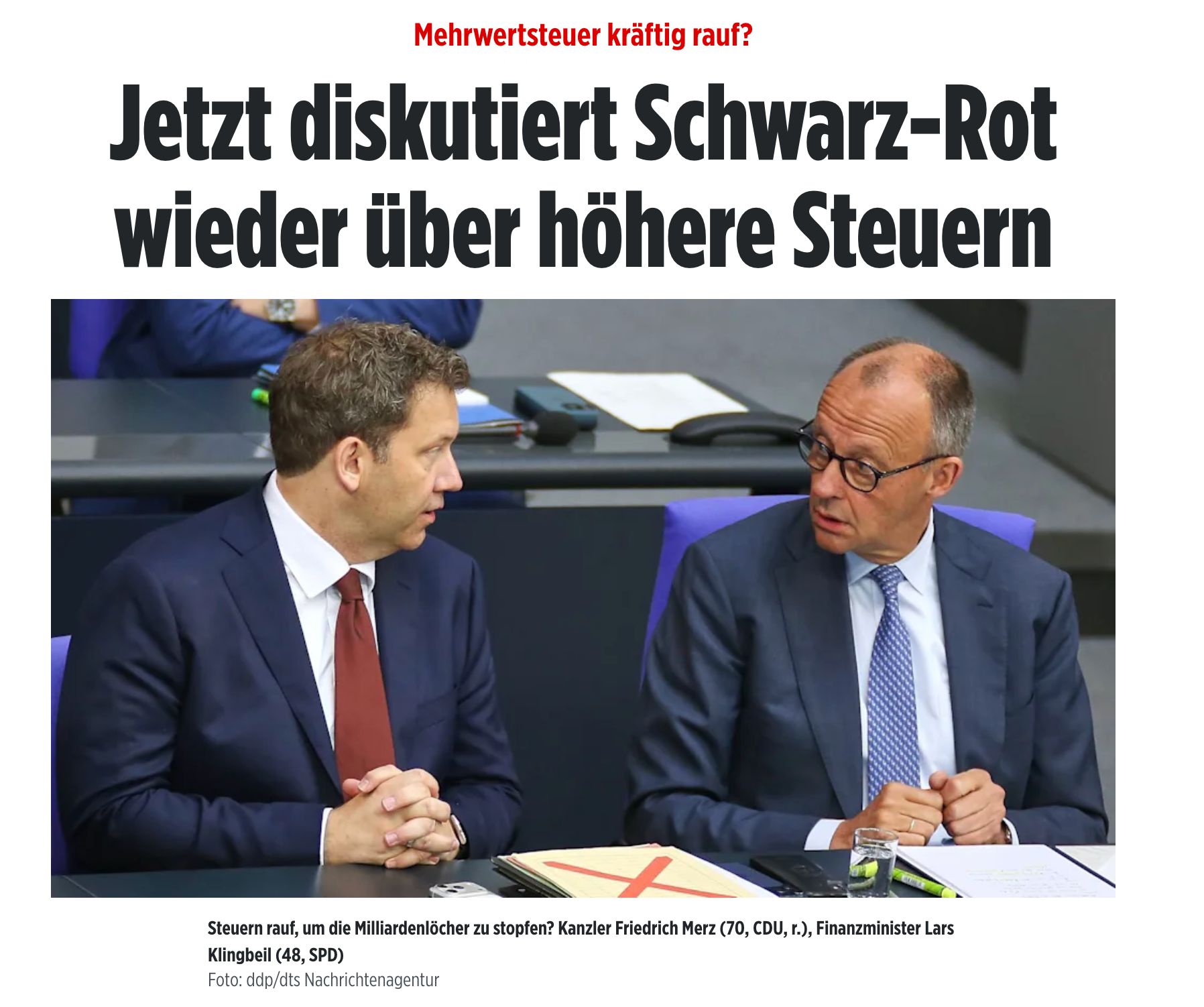
Germany plans to cancel the tax‑free holding period for cryptocurrencies, the author is strongly dissatisfied.
🇩🇪 IN FRANCE, THE TIRES WOULD BE BURNING RIGHT NOW!
From the other side of the world I read the German headlines at a distance. This distance leaves me stunned, because you suddenly see the whole list at once instead of swallowing each report one by one.
And the list is a sham:
- Sugar tax, new
- Plastic tax, new
- the tax‑free holding period for crypto after one year is abolished, future rate about 26 % like capital income, planned from 2027
- Tobacco tax up
- Alcohol tax up
- and there is even talk of a higher VAT
Each item is discussed politely on its own. Here a provocateur, there a talk‑show topic. And that is exactly the trick. As long as you get angry about the sugar tax, you don’t get riled up about the fraud behind it.
Because while six corners simultaneously reach into your pocket, the same state is planning over €200 billion of new debt for 2027. Let that sink in. It squeezes you on all fronts, and the debt mountain still grows. You pay on top, the hole at the bottom gets bigger. A completely grasping profiteer that looks for new victims everywhere and nevertheless rides deeper into the mire.
What really drives me up the wall is a detail. Gold, foreign currencies, collectibles remain tax‑free after one year under §23 EStG, completely untouched. Only crypto is singled out. Constitutional jurists see a crystal‑clear violation of equal treatment under Article 3, the lawsuit wave is already in the starting blocks. Why this one asset? Because it is the easiest, most convenient target. Digital, traceable – and no lobby to push back.
And then the number that exposes the whole charade: the crypto tax is estimated to bring roughly €1 billion, halved from the original €2 billion. €1 billion against over €200 billion of new debt. For the budget, a drop in the bucket. For the individual investor, the same figure hits the portfolio directly. Purely a principle issue – the move that costs the least resistance.
Nonetheless the German finance bubble is currently fighting back loudly. Ready to fight rather than resign, #ProHaltefrist is trending, people finally make some noise. And that is exactly how it should be.
And no, I’m not playing the superior one who got out in time. Because in parallel there’s talk of an exit taxation and a tax on unrealized gains based on the Dutch Box‑3 model. So the very door I walked through is being sealed shut. Stay and swallow the 26 %, or leave and risk the exit tax – they consciously give you no clean way out.
What really makes me furious is the calm around it. In France half of them have tires burning on the streets. In Germany it’s brushed off – one report, a sigh, back to the daily routine. And this is my homeland, damn it. It eats at me that it’s taken so passively.
Maybe I’m far away and see this too harshly from here. So tell me what I miss from the other side of the world. What still needs to happen before the calm finally breaks? 🌴
Smart Money Crypto
OnChain_Analyst
Trader
A
47.1K @Smart_Money https://t.co/ihp5bDuuEf
169
21
16.1K
2026-07-09 07:17
Trend of CRYPTO after release
Extremely Bearish
Germany plans to cancel the tax‑free holding period for cryptocurrencies, the author is strongly dissatisfied.

Dr Martin Hiesboeck
FA_Analyst
OnChain_Analyst
C
112.4K @MHiesboeck Extremely Bullish
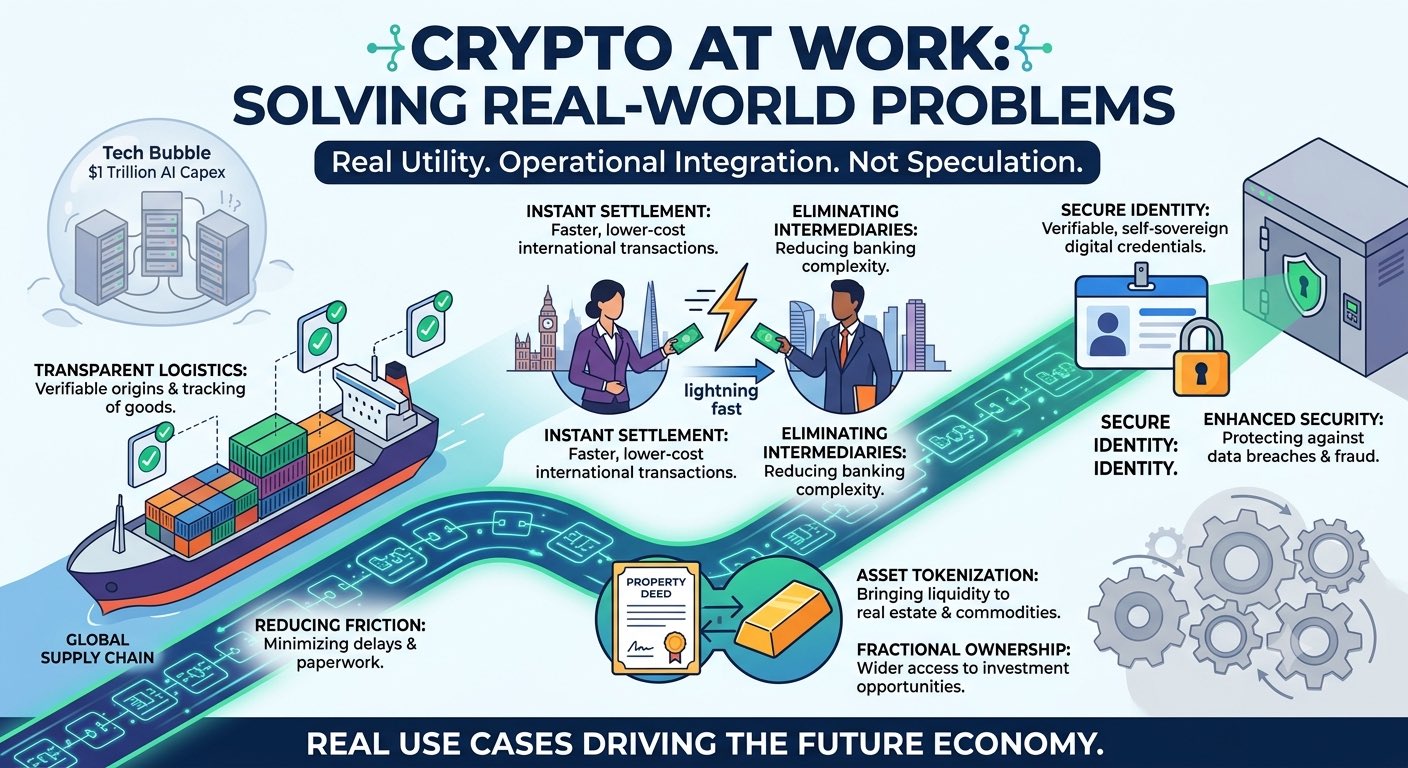
The Bank for International Settlements warns of AI bubble risks, but the tweet emphasizes the core role of cryptocurrency in solving real-world problems and driving the future economy.
🏦 The Bank for International Settlements (BIS)—widely regarded as the "central bank of central banks"—issued a stark warning in its Annual Economic Report. The institution cautioned that the massive capital influx into artificial intelligence could mirror some of history’s most painful economic bubbles, threatening to devolve from a trillion-dollar boom into a "protracted investment bust" and long-term economic stagnation.
The BIS isn't dismissing AI's technological potential; rather, it is sounding the alarm on the financial architecture and market exuberance driving it.
The $1 Trillion Precipice 🏔️
According to the BIS, the world's five largest "hyperscale" tech and cloud provider corporations are on track to spend more than $1 trillion on AI-related capital projects between 2025 and the end of 2026.
Hidden Systemic Risks Explained
🚩Big tech companies are creating a fragile "echo chamber," investing in startups that then immediately buy expensive chips and computing power from those same investors. This artificially inflates company values.
🚩The AI boom is built on massive debt. A sudden drop in tech fortunes could trigger a major financial shock.
🚩 Everyday people's retirement funds are heavily tied to these tech giants, making them vulnerable to a market correction
The immediate threat is a massive imbalance between capital expenditure (capex) and actual commercial monetization. If the revenue generated by these AI systems fails to meet these gargantuan expectations, the BIS warns that a sudden, aggressive pullback in financing will trigger an "investment recession" that ripples far beyond Silicon Valley.
But …
On the operational side, however, actual AI deployment tells a completely different story. Global spending on artificial intelligence is projected to rise significantly this year, driven heavily by businesses integrating the technology into their daily operations.
Instead of total stagnation, the industry is entering an inflection phase focused on efficiency. Organizations are moving away from novelty chatbots and pouring resources into practical software, agentic workflows, and automated system management. This shift means the technology is becoming deeply embedded in the global economy, providing a solid foundation for steady growth even if market valuations experience volatility.
And all of that will not be possible without Crypto. Good solid Crypto that solves actual problems. Not predictions, not meme coins, not hopes and dreams. Real use.
 46
2
3.6K
46
2
3.6K
2026-06-28 14:57
Trend of CRYPTO after release
Extremely Bullish
The Bank for International Settlements warns of AI bubble risks, but the tweet emphasizes the core role of cryptocurrency in solving real-world problems and driving the future economy.
About CRYPTO
CRYPTO (CRYPTO) is a cryptocurrency launched in 2023and operates on the Ethereum platform. CRYPTO has a current supply of 10,000,000 with 0 in circulation. The last known price of CRYPTO is 0.00283965 USD and is up 0.00 over the last 24 hours. More information can be found at https://betbuinu.com/.
Read More
Explore More
BM Discovery









New Listing

HALON Halliburton
-- 0.00%

WMBON Williams Companies
-- 0.00%

STMON STMicroelectronics
-- 0.00%

EQTON EQT Corporation
-- 0.00%

APHON Amphenol
-- 0.00%

TIPON iShares TIPS Bond ETF
-- 0.00%

SYMON Symbotic
-- 0.00%

COPXON Global X Copper Miners ETF
-- 0.00%

SLBON SLB
-- 0.00%

LCAI Lightchain AI
-- 0.00%