活動
合約每日抽獎
每日交易100%中獎
現貨每日抽獎
抽 8,888 USDT 豪禮
投票上幣
投票支持區塊鏈資產,賺取空投
機構
專為機構打造的解決方案
VIP
解鎖專屬福利
BitMart 學院
快速學習入門交易,瞭解區塊鏈知識
BitMart 大使
學習、建設 Web3,從 BitMart 起航
BitMart Travel
全球旅行服務,一站式預訂
BitMart話費充值
話費、流量、套餐便攜充值
轉帳
安全便捷,隨時隨地全球匯款
幣市商城
用加密貨幣滿足您的一切消費需求

Keeta 實時價格數據
今日Keeta的實時價格為$ 0.13 (KTA/USD), 當前市值為 $ 76.56M USD。 24小時的成交量為 $ 621.35K USD。 過去24小時內漲跌幅為 +1.56%, 流通量為 561.71M KTA。
Keeta KTA 價格歷史 USD
跟蹤 Keeta 的今日價格、7天、30天和90天價格
週期
漲跌
漲跌幅 (%)
今日
$ 0.0021
1.64%
7日
$ 0.0092
7.31%
30日
$ 0.0029
-2.15%
90日
$ 0.035
-20.50%

Keeta 市場信息
$ 0.13 24小時價格浮動區間 $ 0.13
歷史最高
$ 1.80
歷史最低
$ 0.11
24小時漲跌幅
1.56%
24小時交易量
$ 621,353.83
流通供給
441.80M
KTA
市值
$ 60.21M
最大供給
1.00B
KTA
完全稀釋的市值
$ 136.29M
交易 KTA

Keeta 社交媒體動態

LinkTOAD goldnutter 𓆏⬡⬢🌊 𓀡 cowabunga
Dev
Media
C
 1.8K @GoldNutter
 看漲
KTA updated and being used by SOLO, outlook looks good

Bamber Boozler 🍻 D
134 @KW8758332185788 https://t.co/gmxUUEOTFd recently updated it's website and now has Keeta mentioned as a network participant.
Here is a reminder of how SOLO will use Keeta and a nice quote from @ericschmidt who funded both projects.
$KTA
https://t.co/uwQzrivxY0
 52
52
 2
2
 1.6K
1.6K
2026-07-01 17:27
發佈後KTA走勢
看漲
KTA updated and being used by SOLO, outlook looks good
LinkTOAD goldnutter 𓆏⬡⬢🌊 𓀡 cowabunga
Dev
Media
C
1.8K @GoldNutter 中性
The KTA token is used for ecosystem functions, fee reductions are possible, and more documentation will be released later.

Keeta D
37.2K @KeetaNetwork In this clip from a recent X Spaces, Keeta's CEO explains how the native KTA token powers the Keeta ecosystem.
More documentation on KTA utility, fee reductions, and network participation requirements will be shared in the future. https://t.co/avt1F42Eod
374
24
31.1K
2026-06-30 20:37
發佈後KTA走勢
中性
The KTA token is used for ecosystem functions, fee reductions are possible, and more documentation will be released later.
LinkTOAD goldnutter 𓆏⬡⬢🌊 𓀡 cowabunga
Dev
Media
C
1.8K @GoldNutter 看漲
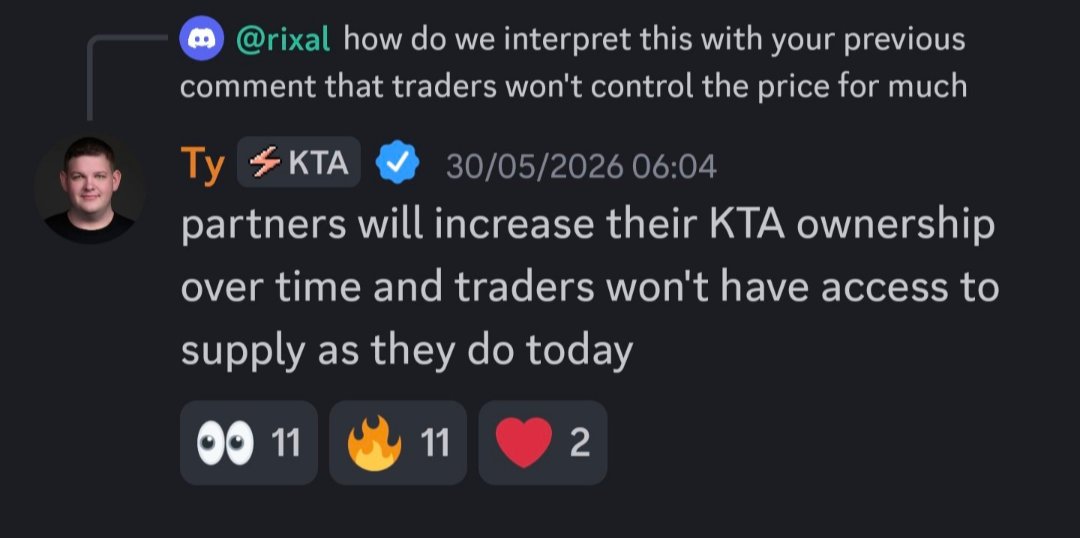
KTA partners will increase their holdings, reducing market circulation and indicating a price rise.

Joe Smith D
32 @SiemReap_Dude $KTA This is getting ready to happen https://t.co/O5lPpX0idv
 116
12
4.0K
116
12
4.0K
2026-06-29 22:37
發佈後KTA走勢
看漲
KTA partners will increase their holdings, reducing market circulation and indicating a price rise.
價格預測
什麼時候是購買KTA的好時機?我應該現在買入還是賣出KTA?
在判斷現在是否是買入或賣出 Keeta (KTA) 的合適時機時,首先需要結合自身的交易策略和風險承受能力。長期投資者與短期交易者對市場信號的解讀往往不同,因此建議根據個人交易計劃做出決策。 根據最新的 KTA 4 小時技術分析,當前交易信號為持有。 根據最新的 KTA 1 天技術分析,當前交易信號為持有。

Beacon預測
概率價格預測(未來24小時)Beacon預測免責聲明
當面頁面的數據結果基於當前交易對的實際交易數據(OCHLV)和相應的指標計算,然後進行分析得出結果。
此預測為實驗性技術產品,僅供參考,不構成投資建議。現實生活中的任何突發事件都可能對交易行為產生重大影響,因此交易者應謹慎決策。
此預測為實驗性技術產品,僅供參考,不構成投資建議。現實生活中的任何突發事件都可能對交易行為產生重大影響,因此交易者應謹慎決策。
關於 Keeta
Keeta (KTA) is a cryptocurrency launched in 2025and operates on the Base platform. Keeta has a current supply of 1,000,000,000 with 561,713,592.08326115 in circulation. The last known price of Keeta is 0.12835265 USD and is up 1.60 over the last 24 hours. It is currently trading on 108 active market(s) with $2,578,258.96 traded over the last 24 hours. More information can be found at https://keeta.com/.
查看更多
探索更多
BM發現









新上市

TIVA Intiva Health
-- 0.00%

LOWON Lowe's
-- 0.00%

ENTGON Entegris
-- 0.00%

CIENON Ciena
-- 0.00%

APOON Apollo Global Management
-- 0.00%

HDON Home Depot
-- 0.00%

TERON Teradyne (Ondo Tokenized)
-- 0.00%

ALABON Astera Labs
-- 0.00%

CNT Centel
-- 0.00%

CRDOON Credo Technology Group Holding Ltd
-- 0.00%
購買 KTA
交易 KTA